
In many areas, late autumn and winter can bring plenty of bone-chilling cold and skin-soaking wet weather. As the air grows colder and the days get shorter, you may wonder if you need to change your pet’s diet. The answer depends on where you live, the type of winter weather you have and how much time your pet spends outdoors — even if they’re built for winter weather.
When a Pet’s Home Is Perennially Warm
If you live in the southern United States or on the West Coast and your dog or cat lives indoors, it’s unlikely that you’ll need to change your pet’s diet during cooler months, as long as their activity level stays about the same. If your dog lives primarily outdoors, however, you may need to make minor adjustments. The key is whether your dog gets a consistent amount of exercise from season to season — something that can be tough to do with less daylight and potentially more rain.
Indoor Dogs Living in Four-Season Areas
Our furry friends who live predominantly indoors in cold, snowy areas depend on us for their daily dose of exercise. As temperatures drop, some of us — including our canine companions — become increasingly reluctant to leave the comfortable warmth of our homes to go for walks or to visit the dog park. Since less exercise means fewer calories used, you may need to feed less to help your canine companion maintain a healthy weight. The other option is to maintain the same activity level no matter what the weather. If you and your dog spend a lot of time outside enjoying the cold weather and snow sports, you may need to increase your furry friend’s food. As always, check with your veterinarian before making any dramatic changes.
Watch for Winter Weight Gain in Less Active Dogs
For many indoor dogs, winter does not increase calorie needs. In fact, some dogs may need fewer calories during colder months if shorter days, snow or freezing temperatures lead to less exercise, less playtime and more time indoors. When activity drops but feeding stays the same, gradual weight gain can follow. That’s why it’s important to keep an eye on your dog’s body condition throughout the winter.
If your dog is less active than usual, your veterinarian may recommend feeding a smaller portion or switching to a lower-calorie formula. Treats count too, so it can also help to cut back on these extras or offer smaller portions. Small adjustments can help your dog maintain a healthy weight until spring.
Dogs with Outdoor Residences in Four-Season Locales
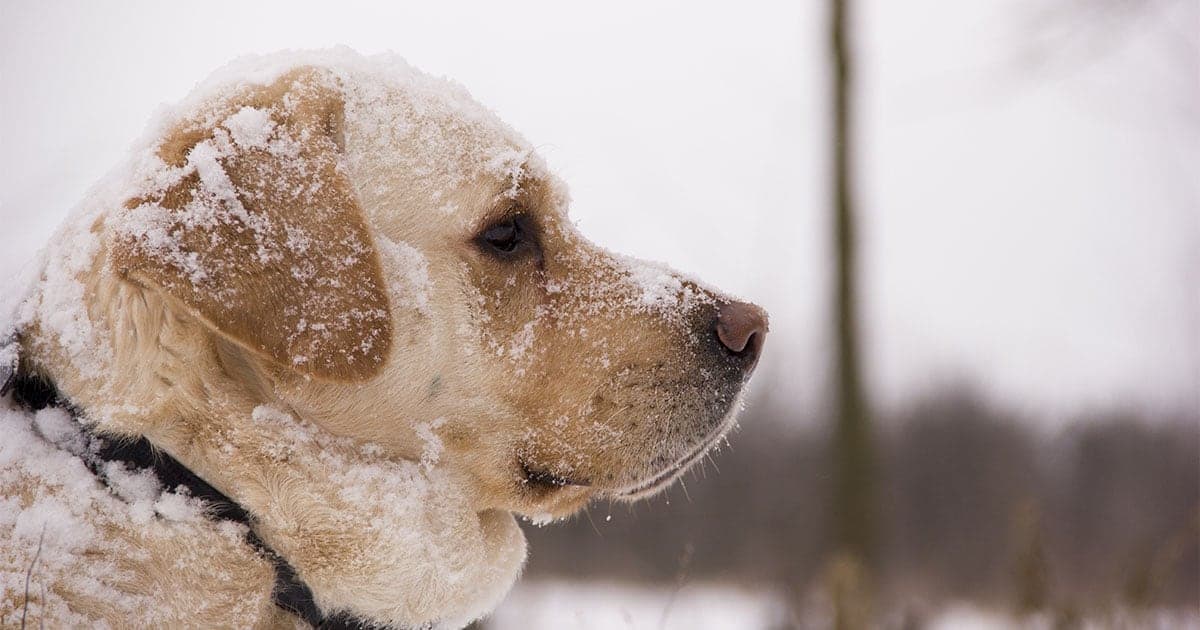
If your dog lives outdoors almost exclusively during the cold winter months, you’ll want to discuss changing their diet with your veterinarian. Like us, dogs (and cats) shiver to keep a consistent body temperature. But shivering uses a lot of energy (calories) — your dog may need significantly more calories during cold weather. The increase in calories leads to more fat accumulation and helps compensate for the calories lost to shivering.
It’s also important to note that an outdoor dog may rely more on fat as an energy source because it provides concentrated, long-lasting fuel to help maintain body temperature. This means your cold-weather outdoor dog may benefit from a dog food that’s calorie-dense and slightly higher in fat. Any dietary changes should be made with the guidance of your veterinarian.
A number of factors, ranging from your dog’s size, their coat type and length, and their outdoor shelter, will affect the amount of food they need.
It’s Not Only About the Cold (and Snow)
Cold temperatures aren’t the only environmental factor that affects our dogs’ nutritional needs during late autumn and winter. Fewer daylight hours can also mean less exercise for our furry friends. Just like the gradual decrease in temperature, less daylight may mean you’re more reluctant to walk your dog or play outside with them as you were when there was more daylight. If your dog isn’t getting as much exercise as they were during spring and summer, you may need to decrease the amount of food fed.
An Indoor Cat’s Diet Can Remain the Same in Winter
Indoor cats who get a consistent amount of activity from one season to the next don’t need more food during the winter. And like dogs, cats that spend a lot of time outside during cold weather will need more food to maintain a consistent body temperature without losing weight. That said, a four-year study of 38 cats showed that cold weather and daylight length can stimulate the appetite and food amounts consumed by both indoor and indoor-outdoor cats. The amount of food eaten was greatest during October through February and lowest during June through August. The changes in appetite didn’t lead to substantial weight changes, suggesting the amount of food consumed by the cats was in response to changes in energy needs.
Every pet is an individual, and the best feeding program is one tailored to your pet’s unique needs. Be sure to talk with your veterinarian about your dog’s or cat’s nutritional needs during the winter months.