
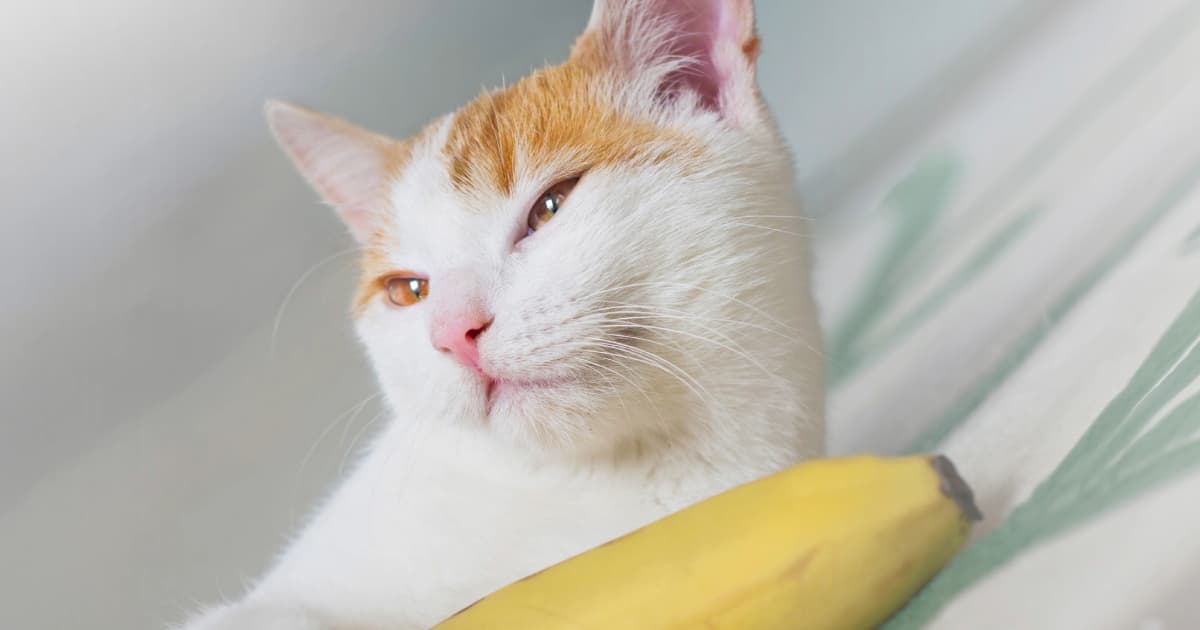
Cats can be very persuasive at getting what they want. So if your cat is asking for a bite of banana, should you give them some? While it may be tempting to give your cat a small bite of what you’re eating, it’s important to remember that human food is often not the best option for your feline friend. Let’s take a look at whether feeding bananas to your cat is safe or not.
Are Bananas Good for Cats?
While bananas are not toxic to cats, they offer minimal nutritional benefits. Cats are obligate carnivores, which means they require specific nutrients found in meat to thrive. Unlike humans, cats don’t have functional sweet taste receptors, so they do not experience sweetness in the same way that we do. Still, some cats may show interest in bananas due to texture, smell, curiosity and human interactions. For optimal health, it’s best to focus on a balanced, meat-based diet formulated specifically for cats.
Are Bananas Toxic to Cats?
Bananas are not toxic to cats, so technically, cats can eat bananas in small amounts; but that doesn’t mean you should feed them to your pet. They are generally safe for most cats to eat in moderation, so if your cat occasionally nibbles on a small slice, they should be fine. Just be sure to keep portions very small, as bananas are high in natural sugars and too much can lead to digestive upset.
It’s also important to note that banana peels are not safe for cats to eat. They are difficult to digest and can pose a choking hazard or even cause a blockage in the digestive tract. Always remove the peel and offer only small portions of the soft fruit, if at all. Just like with adult cats, it’s best not to let kittens eat bananas, because it can cause an upset stomach. Kittens have a more sensitive digestive system, so feed them treats that are specifically made for kittens.
As with any new food, ask your veterinarian for advice before introducing bananas or other human foods to your cat’s diet, especially if your cat has existing health conditions or a sensitive stomach. If your cat does eat bananas, make sure to monitor them for any unusual symptoms afterward. While bananas are not toxic to cats, some cats may still have sensitivities. Watch for signs like vomiting, diarrhea or decreased appetite, which may indicate that bananas don’t agree with your cat; in which case, you should avoid offering them again and consult your vet if symptoms persist.
Can Cats Eat Banana Bread?
No, banana bread usually contains high levels of sugar, butter and oil, which are not well-tolerated by cats and can lead to an upset stomach. Additionally, some recipes for banana bread include ingredients like chocolate, raisins or certain nuts, which may not be appropriate for cats. The high calorie and fat content can cause gastrointestinal issues, and the banana bread doesn’t provide any real nutritional or health benefits, so it should not be fed to your cat.
Which Fruits Are Toxic to Cats?
Some fruits should be considered with caution when it comes to cats. Grapes and raisins may be of concern, but potential toxicity has not been documented in cats as it has been in dogs. Cherries are often thought of as toxic, but it is the pits that are the main problem, not the cherry flesh. Cats generally should not eat citrus fruits like oranges, lemons, limes and grapefruits, which contain compounds and essential oils that can irritate a cat’s digestive system and may even be mildly toxic.
Better Cat Food Options Than Bananas
Similar to peanut butter, bananas are not toxic, but they aren’t an ideal treat for cats. Because cats have specific dietary needs, fruits like bananas don’t provide much nutritional value and can add unnecessary sugar to their diet.
It’s better to choose healthier, cat-appropriate options, such as small portions of lean meat in bite-sized pieces. Try chicken and turkey or tuna and other fish, or treats specifically made for cats. Sticking to these options may help avoid potential digestive issues and will typically be much more appealing to your cat anyway. Remember that treats should only account for 10 percent of your cat’s total daily calories.
To keep your cat safe and healthy, bananas shouldn’t be a significant part of your cat’s diet. Instead, focus on an appropriate complete and balanced formula for cats and choose treats that support their individual dietary needs.