
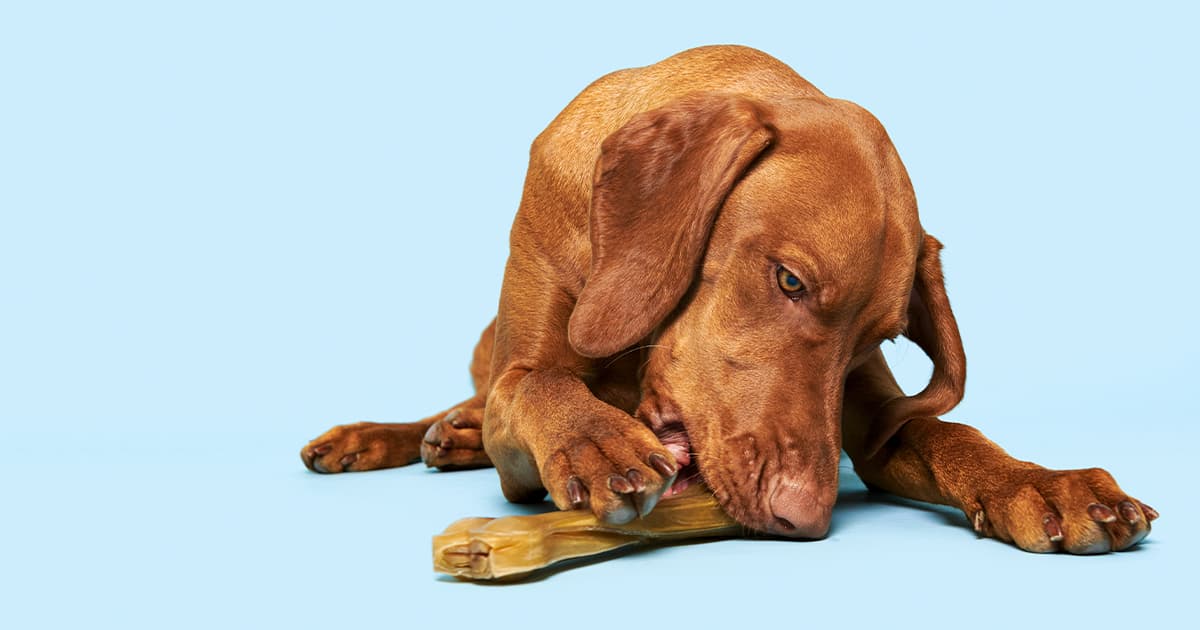
Let’s face it, most dogs love to chew, and they need a safe, appropriate outlet for this natural behavior. Chewing provides mental stimulation, helps relieve boredom and can satisfy your dog’s instinct to gnaw. Many dog owners turn to rawhide chews to keep their pets occupied and to satisfy their natural urge to chew. However, traditional rawhide may not be the best choice for every dog, and it carries some risks.
What Is Rawhide Made Of?
Rawhide is a byproduct of the leather industry, typically made from animal hides, most commonly cattle. Traditional rawhide consists of the inner layer of an animal’s hide that has been cleaned, processed and dehydrated. Unlike leather, which undergoes tanning to improve its softness, flexibility and durability, rawhide is processed without the tanning treatment. Once processed, it can be shaped into a variety of forms, including rolls, strips, twists and bones.
Are Rawhide Bones Bad for Dogs?
Rawhide bones can pose health risks to your dog, particularly when they chew off and swallow large pieces. One of the biggest risks associated with rawhide is choking or digestive blockages. If your dog swallows large pieces of rawhide, they can become lodged in their throat or digestive tract. Signs of a possible blockage may include vomiting, diarrhea, loss of appetite, abdominal pain or lethargy. Seek emergency care immediately if your dog is struggling to breathe or appears to be choking. If you suspect your dog has swallowed a large piece of rawhide or is showing signs of an obstruction, contact your veterinarian or emergency clinic. Gastrointestinal obstructions can be life-threatening and may require endoscopic removal or emergency surgery.
Your dog’s size, chewing habits and the type of rawhide product can significantly influence the level of risk involved. Dogs that chew aggressively or tend to swallow large pieces rather than slowly gnawing on them are at greater risk of choking or developing intestinal blockages. Smaller dogs may have difficulty handling thick or hard rawhide chews, while larger dogs with strong jaws may break them into large chunks that can be swallowed. Furthermore, while some rawhide treats soften as dogs chew them, making them easier to swallow, they can still cause digestive issues. Although many dogs tolerate rawhide without problems, others may experience stomach upset, especially those with sensitive digestive systems; pet parents need to monitor their pets closely and consider safer alternatives when necessary.
Quality Is Key
Rawhide processing methods vary, and some products may contain artificial dyes, flavorings, preservatives or bleaching agents that can upset your dog’s stomach. Improper manufacturing processes could potentially leave undesired chemical residues in the finished product. Because appearance alone is not a reliable indicator of safety, choosing reputable manufacturers that disclose ingredients and adhere to strict quality control standards can help minimize risks. You may want to avoid rawhide if you suspect your dog has a sensitive stomach or specific food allergies.
Potential Bacteria Exposure
Rawhide chews and other animal-derived dog treats, like pig ears, can occasionally carry bacteria like Salmonella. Contaminated treats may expose dogs and people to harmful bacteria, even when the dog does not appear sick. Puppies, older dogs and dogs with weakened immune systems may be particularly vulnerable to serious illness. Wash your hands after handling animal-derived chews, clean all surfaces that come into contact with them and follow the manufacturer’s storage and handling instructions.
Dental Risk
Rawhide can also pose a dental risk. Although chewing can help remove some plaque, hard or tough chews may fracture teeth, especially in dogs that bite down forcefully. Choose products appropriate for your dog’s chewing strength and avoid chews that are excessively hard. If you are unsure whether a chew is suitable, ask your veterinarian for advice, particularly if your dog has existing dental problems.
Is Beef Hide Bad for Dogs?
Beef hide is essentially a type of rawhide made exclusively from the inner layer of cow skin. Dogs may choke on large pieces or develop digestive blockages if they swallow chunks that are difficult to pass. Some dogs may also experience gastrointestinal upset. While it can help satisfy chewing instincts, it is not risk-free and can be harmful if not managed properly.
Safer Dog Chew Options
If you’re looking for safer alternatives to rawhide bones, there are several options that can satisfy your dog’s natural urge to chew while supporting their overall health.
Durable rubber chew toys make a good alternative for many dogs, including those who aggressively chew. They are made to hold up with repeated chewing and won’t break apart easily. They come in various sizes, and some can be filled with treats such as peanut butter, cooked sweet potato or kibble. It’s important to avoid chews that are so hard they can damage your dog’s teeth.
Bully sticks or beef trachea are additional chewing options, although both carry potential risks. Bully sticks, made from dried beef pizzle, are generally considered more digestible than traditional rawhide, but swallowing large pieces can still cause choking or obstruction. Dried beef trachea may also break into pieces that pose a choking hazard. Both products should be offered only under supervision and removed when the pieces become small enough to swallow.
Dehydrated meat, or jerky, is made from dried muscle meat, such as beef, bison, chicken or turkey and can be a quick treat, but not a long-term chew. Some dehydrated meat treats contain only one ingredient, making them a simple alternative to give your dog that is protein-packed.
Dog dental chews are a great way for pet owners to help keep their dog’s teeth clean and healthy while giving them a tasty reward. These special dog treats are designed to help reduce plaque and tartar buildup as dogs chew, supporting better dental health and fresher breath. Look for products that have earned the Veterinary Oral Health Council (HVOHC) Seal of Acceptance, indicating they have demonstrated effectiveness in controlling plaque and tartar. Keeping your dog’s teeth healthy is an important part of their overall well-being, and dental chews can make oral care more enjoyable. By adding dog dental chews to your pet’s routine, you can help maintain clean teeth, but they should not replace regular toothbrushing and veterinary dental care.
Ultimately, while rawhide chews may work for some dogs, they may not be the best choice for every dog. No chew is completely risk-free, so supervision remains important regardless of the product. For puppies, dogs that don’t chew adequately and aggressive chewers, consider alternatives to rawhide. When in doubt, ask your veterinarian to recommend an appropriate chew based on your dog’s size, age, health and chewing behavior.