

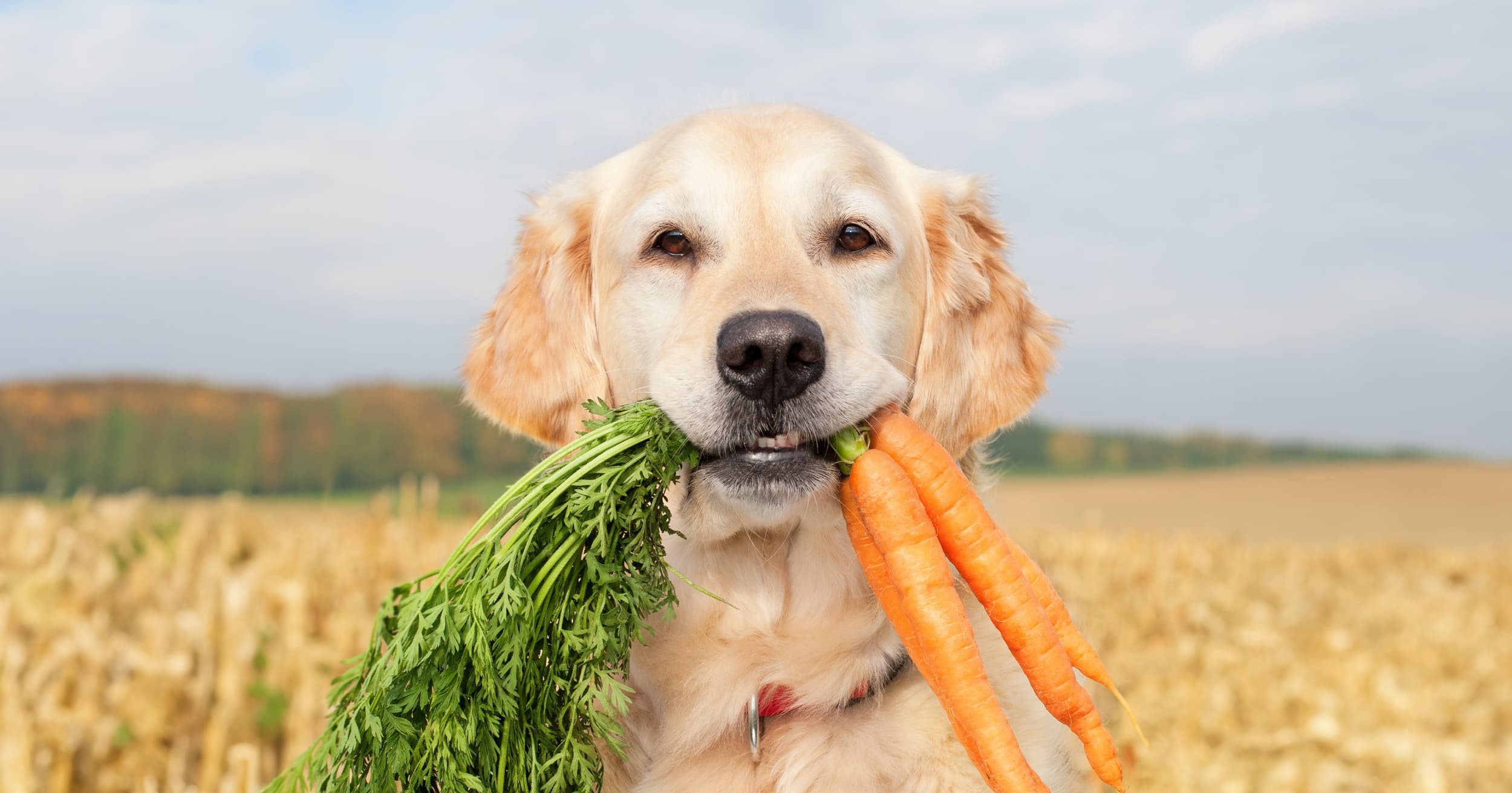
If you find your dog in the vegetable patch or snacking on veggie scraps, should you worry? Can dogs eat all types of vegetables or are there some that shouldn’t be allowed in a dog’s diet? Let’s dig in and find out which vegetables dogs can safely eat.
What Vegetables Are Good for Dogs?
There are many vegetables that are not only safe for dogs, but provide nutritional benefits for them as well. Squash (pumpkins), while technically a fruit, are great for dogs to eat since they’re high in fiber and packed full of antioxidants, and are rich in vitamin C, potassium and fiber. They are easier for dogs to digest if cooked first, and can make a great addition to your treat rotation. However, dogs shouldn’t be allowed to chew on the stems or eat the seeds of pumpkins (the pumpkin “guts”) because these are hard to digest and can be a choking hazard.
Kale is another vegetable which is a great source of vitamins and minerals for dogs. However, kale is best given in small quantities because it contains isothiocyanates that can cause an upset digestive system and the production of gas if a dog eats a lot of them.
Other vegetables that are safe for dogs to eat as a tasty treat include corn that’s removed from the cob and served without seasonings or spices, green beans that are cooked or raw, potatoes that are peeled and cooked without seasonings and sweet potatoes that are peeled and cooked without seasonings.
Are Carrots Good for Dogs?
Carrots are great low-calorie dog treats. They’re a good source of fiber, and their orange color comes from beta-carotene, which produces vitamin A and is a powerful antioxidant. If your dog pulls up carrots in the garden, it’s OK for them to eat all parts of the carrot, including the leafy green tops and the carrot skin.
Can Dogs Eat Broccoli?
Most dogs can snack on raw (or cooked) broccoli in small amounts, but it’s best if the florets and stalks are cut up into bite-sized pieces. Broccoli is a great source of fiber, vitamin C and vitamin K. On the downside, the broccoli florets contain isothiocyanate compounds, which, as we mentioned above, can upset a dog’s digestive tract.
Can Dogs Eat Lettuce?
Now let us talk about lettuce. It’s not the tastiest food, but if your dog does take a bite of some iceberg lettuce or arugula, that’s not a problem because it’s not toxic. It’s mostly water with a bit of fiber content which helps with hydration, but should still be fed in moderation.
Can Dogs Eat Spinach?
Packed full of vitamins, minerals, fiber and antioxidants, spinach is a healthy snack for dogs in moderation. Spinach can be difficult for dogs to digest if eaten raw, and it also contains isothiocyanates, so watch your dog for digestive tract issues if they eat a lot of it. Spinach also contains calcium oxalate, which can cause the formation of kidney or bladder stones in some dogs if they eat large amounts.
Are Brussels Sprouts Safe for Dogs?
Their pungent flavor means that they’re sometimes in the “yuck” category for humans, but Brussels sprouts are healthy for dogs — they’re just best eaten in small amounts. Cooking them first will also make them more digestible. Even small amounts can cause some stinky gas issues though, and eating too many can upset a dog’s digestive system thanks to those isothiocyanates.
Can Dogs Eat Cabbage?
If your dog goes searching in the cabbage patch for baby dolls and only turns up cabbages, you’re probably going to find out about it pretty quick. Like the other cruciferous vegetables we’ve mentioned, large amounts of cabbage can cause your dog to produce a large amount of gas. This may be more of a problem for you than your dog, unless your dog is susceptible to bloat.
Are Radishes Safe for Dogs to Eat?
Radishes are another vegetable that has a very particular flavor. If your dog does eat them, make sure it’s only a small amount and that they’re not green. Green radishes can cause an upset stomach. On a side note, horseradish is not a radish — it belongs to the same family as mustard and wasabi. Horseradish is not toxic to dogs, but it’s recommended that you don’t feed it to your dog because it can upset their digestive system.
Which Vegetables Should Dogs Avoid Eating?
While vegetables are usually considered healthy for humans, that’s not always the case for pets. Feeding vegetables to your dog can have serious consequences if they’re the wrong ones, as some vegetables are toxic to dogs.
Just like grapes and raisins, onions are on the “do not eat” list for dogs, as is any vegetable that is part of the Allium genus, including chives, leeks, garlic, shallots and green onions (also called scallions or spring onions). Vegetables in the Allium genus contain a compound that can damage your dog’s red blood cells and lead to anemia when consumed at toxic doses. It can also cause gastrointestinal issues in dogs. All parts of the onion plant are harmful, including the bulb, leaves and juices, so don’t feed any part of an onion or onion powder to your dog.
If you know or even suspect that your dog has eaten onions, onion powder or any other member of the Allium family, immediately call your veterinarian or an after-hours emergency clinic, or one of the two animal poison control centers in North America:
Vegetable Superfood Health Benefits for Dogs
Some vegetables and fruits have such a high nutritional value that they’re often labeled “superfoods.” But that’s not their only claim to fame. Some superfoods are also functional ingredients that provide bonus benefits beyond basic nutrition (e.g., antioxidants, omega fatty acids and fiber) when they’re part of a complete and balanced pet food diet. Examples of superfoods include carrots, kale, spinach and pumpkin.
Vegetables and Fruits Provide Nutrients in Pet Food
Vegetables and fruits are used in many dog foods to help provide some of the over 40 essential nutrients dogs need to live happy and healthy lives. Carrots, kale, pumpkin and spinach are used in many commercial dog foods (including Diamond Pet Foods), along with other fruits and vegetables like blueberries, coconut, cranberries, oranges, papaya, peas, potatoes, raspberries, sweet potatoes and tomatoes. The vegetables and fruits are prepared in the correct way and used in the correct amount to provide the nutrients your dog needs without any of the health problems that we mentioned above.
Dogs Can Eat Many Vegetables Safely
Most veggies (and fruits) are safe options for dogs to eat as an occasional treat when fed in small amounts and prepared correctly. If your dog has been in the garden or snuck some people food from the kitchen, and you’re not sure what they ate or how much of it, keep an eye on them for any signs of illness. If your dog shows any symptoms like stomach pain, vomiting or diarrhea, immediately call your vet for advice.