
Hearing your cat has a urinary blockage can be a scary situation for any cat owner. If a urinary blockage occurs, it requires immediate veterinary care to prevent severe complications such as kidney failure, heart problems, bladder rupture and even death. Keep reading to learn about urinary blockages in cats and how to recognize the symptoms.
Cat Urinary Blockage Symptoms
If your cat is making frequent litter box visits or straining in the litter box with little or no urine coming out, don’t wait; call your veterinarian immediately. Cats with a urethral obstruction or urinary blockage can deteriorate rapidly and may develop life-threatening complications within 24–48 hours if not treated promptly.
What Causes a Urinary Blockage in Cats?
Urinary blockages in cats are often part of a broader condition known as feline lower urinary tract disease (FLUTD). One of the most common underlying causes is feline idiopathic cystitis (FIC), a stress-related inflammation of the bladder with no identifiable infection or single cause. In cats with FIC, inflammation can lead to the formation of urethral plugs — soft mixtures of mucus, protein and cells — that can partially or completely block the urethra and stop urine flow. Bladder stones (uroliths) can also cause obstruction, particularly in cats prone to crystal formation. Less commonly, blockages may result from urethral strictures (narrowing due to prior injury or inflammation), tumors or severe urinary tract infections, although true bacterial infections are not common in otherwise healthy cats.
Think of a urinary blockage as a clogged pipe in your cat’s urinary tract. When the urethra becomes blocked, urine cannot exit the body and begins to back up in the bladder, causing it to become painfully distended. The urine can then back up into the ureters (the tubes between the bladder and kidneys) as well as into the kidneys. As a result, toxins that are usually eliminated in the urine build up in the cat’s body. The resulting acid/base imbalances and abnormal electrolyte levels, especially hyperkalemia (high potassium), can ultimately lead to life-threatening cardiac arrhythmias in as little as 24 hours. Kidney damage may also occur. This is why urinary obstructions in cats are true medical emergencies.
If Your Cat Can’t Pee, Seek Emergency Care
Early on, a blocked or partially blocked urinary tract can cause cats to make frequent trips to the litter box, straining with little or no success, a sign that’s easy to confuse with constipation. While straining, the cat may cry or howl in pain. If the cat begins to associate the litter box with pain, they may try to urinate in other locations of the house, too. Sometimes, a small amount of bloody urine may be found on the floor. The cat might lick their genital region excessively and also refuse food or seem depressed.
Even mild symptoms mean you need to visit your veterinary clinic, as they can rapidly progress to a complete urinary blockage. Once the urine has been blocked for around 24 hours, toxin buildup can cause vomiting, weakness and lethargy. The good news is that if urinary blockage is caught early, most cats will recover.
Is Urinary Blockage in Male Cats More Common?
Urethral blockage typically occurs more often in male cats, whether they’re neutered or not, because they have a longer and narrower urethra than female cats. It is estimated that up to 10 percent of male cats may experience a urinary blockage at some point in their lives. Female cats can experience urinary issues, too, but a complete blockage is much rarer in females. In male or female cats, a urinary blockage can be fatal.
Diagnosis of a Urinary Blockage in Cats
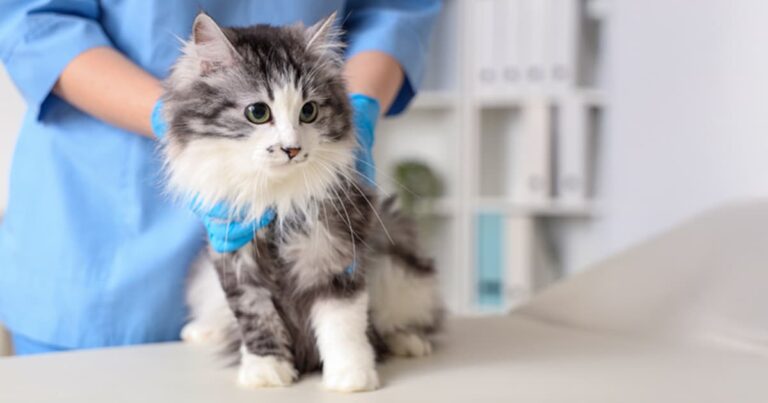
In cats with a history of not being able to urinate, the diagnosis is usually straightforward: The veterinarian can usually palpate (feel) a firm, distended bladder in the abdomen. Additional diagnostics are used to assess the severity and underlying cause, including blood work to evaluate kidney function and electrolytes (such as elevated potassium), and urinalysis. Imaging, such as X-rays or ultrasound, may be recommended to identify bladder stones, urethral plugs, or other abnormalities. In some cases, an electrocardiogram (ECG) can also be helpful to check for heart rhythm changes.
Treatment of Urinary Blockage in Cats
Treatment of urinary obstruction focuses on stabilizing the cat and restoring urine flow as quickly as possible. Intravenous fluids are often started to correct dehydration, support kidney function and help flush accumulated toxins. If electrolyte imbalances such as high potassium (hyperkalemia) are present, medications may be given to help protect the heart and stabilize cardiac function. Pain management is also an essential part of treatment.
Once a cat is stable, sedation or anesthesia is typically required to safely relieve the obstruction. The veterinarian will place a urinary catheter (sterile tube) into the urethra and gently flush sterile saline to dislodge the blockage, allowing urine to flow again. The catheter usually needs to remain in place for 24 to 72 hours. During this time, cats are closely monitored for recurrence, electrolyte imbalances and overall recovery from the procedure.
Preventing Recurrence of Feline Urinary Blockage
Up to 25 percent of cats with urethral obstruction may experience it again. Because urinary blockages are often associated with FLUTD or FIC, strategies to help manage these conditions can help. These may include environmental enrichment to reduce stress (such as providing hiding places, vertical space and interactive play), good litter box housekeeping, diet modification and tactics to increase water intake.
For cats that block repeatedly despite medical management, a surgical procedure, known as a perineal urethrostomy (PU), may be recommended. This procedure creates a wider urinary opening by removing the narrow part of the urethra, significantly reducing the risk of future blockages. While most cats will not require a perineal urethrostomy in their lifetime, PU can be a highly effective long-term solution in recurrent cases. However, it does not eliminate all urinary tract issues and can be associated with complications such as urinary tract infections and urine scalding, so postoperative management and monitoring are important.
What You Can Do for Your Cat’s Urinary Health
Diet plays an important role in supporting urinary health for cats, especially for those with a history of urinary blockage or FLUTD. Specialized urinary diets are designed to maintain an appropriate urine pH, reduce crystal and stone formation and promote overall urinary health. Your veterinarian can recommend the most appropriate diet for your cat’s condition.
Maintaining a healthy weight and minimizing stress are also key factors in preventing urinary issues. Obesity and anxiety due to environmental stress are both linked to FIC, which can increase the risk of blockage. Proper hydration is also important for the prevention of urinary issues. You can encourage your cat’s water intake by offering multiple clean and accessible water sources, offering canned food, utilizing water fountains and by adding water to their food.
Regularly cleaning the litter box and observing your cat’s bathroom habits can help you detect early signs of urinary trouble. Cat owners who are attentive to their cats’ litter box activities are better positioned to identify potential urinary blockage issues early and seek emergency veterinary care promptly, which can save your cat’s life.