

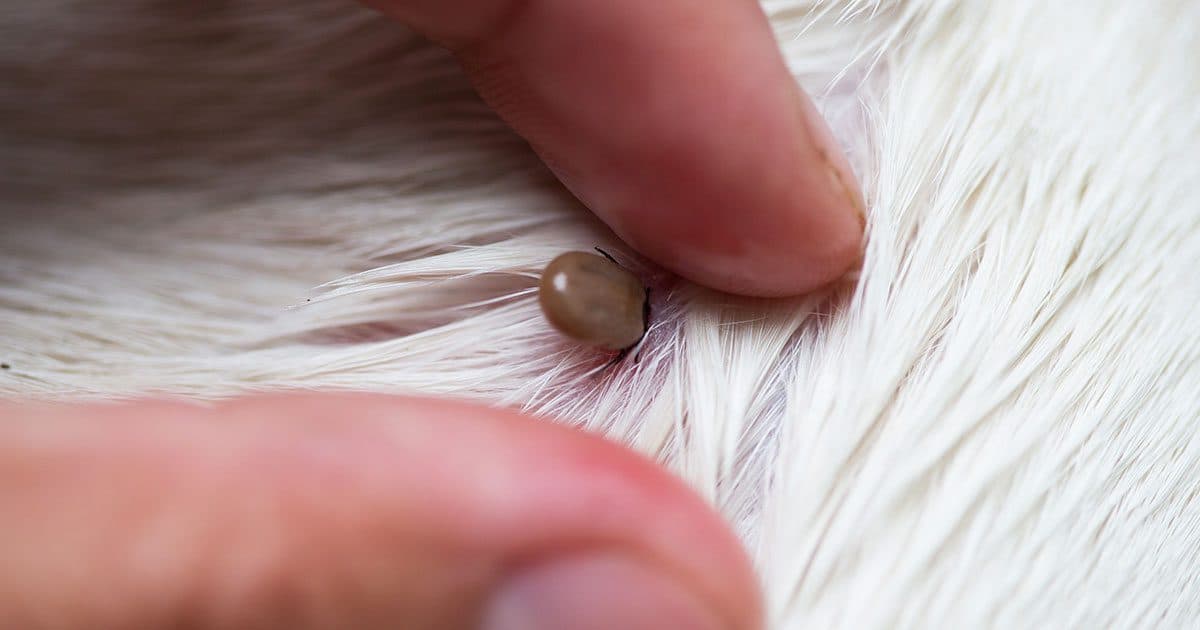
Several tick species can carry and transmit bacteria that cause diseases in dogs, including anaplasmosis, ehrlichiosis, Lyme disease and Rocky Mountain spotted fever. The good news is that not all ticks are infected, and many tick bites don’t result in disease. But it’s still important to learn about the diseases that can affect dogs and how to prevent tick-borne diseases in dogs in the first place.
Lyme Disease in Dogs
Lyme disease is transmitted by the blacklegged tick (also known as the deer tick) and is caused by a spiral-shaped microorganism called Borrelia burgdorferi. Lyme disease, like other tick diseases, is a zoonotic disease, which means the same tick can infect people and dogs. It takes 1–2 days for the tick to transmit the bacteria, so prompt removal of the tick is essential.
Most dogs don’t show signs of illness with Lyme disease. If they do, the signs will usually be present 2–5 months after infection. Symptoms include fever, swollen lymph nodes and lameness that shifts between legs. Lyme disease is diagnosed with a blood test and treatment is typically two weeks (or more) with the antibiotic doxycycline.
The blacklegged tick can climb up to 3 feet off the ground waiting for a host. It is able to survive cold winters, which is why year-round tick prevention products are usually recommended for dogs who live in high-risk areas. Vaccination against Lyme disease may also be recommended for dogs in high-risk areas.
Anaplasmosis in Dogs
Anaplasmosis is caused by bites from the blacklegged tick (deer tick) and the western blacklegged tick, which transmit the bacteria Anaplasma phagocytophilum. In dogs, anaplasmosis can also be caused by Anaplasma platys which is transmitted by the brown dog tick.
It takes one to two weeks after infection for anaplasmosis symptoms to develop. However, some dogs may never show signs of infection. Typical signs of anaplasmosis infection in dogs include fever, lameness, joint pain, lethargy, dehydration and appetite loss. Symptoms of anaplasmosis are similar to Lyme disease, and it is common for coinfection to occur as they are transmitted by the same ticks in the same geographic areas.
Diagnosis of anaplasmosis is confirmed with a blood test to detect antibodies. However, a positive test does not necessarily indicate an active infection, as a dog can have a positive result, even if they were infected several months ago. Treatment with doxycycline for at least two weeks is typically recommended, but only if a dog has signs of an active infection. Treatment is the same for anaplasmosis and Lyme disease, but it is often extended to at least four weeks if a coinfection is present.
Ehrlichiosis in Dogs
In dogs, ehrlichiosis is caused by bites from the brown dog tick and, less commonly, the lone star tick. The brown dog tick transmits the bacteria Ehrlichia canis and the lone star tick transmits E. ewingii.
There are stages of infection: acute, subclinical and clinical. The acute stage starts 1–3 weeks after infection with symptoms like fever, swollen lymph nodes, appetite loss and coughing. Most dogs infected with E. canis will recover, but if not, they move into the subclinical stage.
The subclinical stage has no visible symptoms and if the owner didn’t notice any signs of the acute stage, they might not notice the subclinical stage either, unless their dog has blood drawn for another reason. If the dog’s immune system is unable to clear the infection, they may progress to the chronic stage, with symptoms of abnormal bleeding and neurological problems. The chronic stage can be fatal. German shepherds are particularly susceptible to developing the chronic form of this disease, which makes early diagnosis particularly important for this breed.
Similar to other tick-borne diseases, ehrlichiosis is diagnosed with a blood test and typically requires antibiotic treatment with doxycycline (if symptomatic) and supportive care.
Rocky Mountain Spotted Fever in Dogs
Rocky Mountain spotted fever (RMSF) is caused by bites from a number of different tick species, including American dog ticks, Rocky Mountain wood ticks and brown dog ticks. Unlike other diseases which can take days to transmit, RMSF can be transmitted within hours.
Clinical signs of RMSF infection in dogs include fever, joint and abdominal pain, appetite loss, enlarged lymph nodes, vomiting, diarrhea, swollen face and limbs, and coughing.
Similar to other tick-borne diseases, Rocky Mountain spotted fever is diagnosed with a blood test and is typically treated with doxycycline and supportive care. Unfortunately, RMSF is fatal in up to 10 percent of infected dogs, particularly if treatment is delayed.
Ticks and Chronic Kidney Disease in Dogs
Exposure to Borrelia burgdorferi, the spiral-shaped bacterium that causes Lyme disease, and Ehrlichia canis, the bacterium that causes ehrlichiosis, has been shown to increase the risk of chronic kidney disease (CKD) in dogs. Researchers with IDEXX, a company that provides laboratory services, diagnostic tests and laboratory equipment to veterinary practices, performed a retrospective study using test results from its patient databases.
Dogs with a positive Lyme disease antibody test result had a 43 percent higher risk of developing kidney disease than dogs who did not have a positive test result. Dogs with a positive Ehrlichia antibody test result in E. canis-endemic areas had a 300 percent greater risk of developing CKD. This means that if you live in a Lyme disease- or E. canis-endemic area and your dog tests positive for Lyme disease or ehrlichiosis, your dog has an increased risk for developing kidney disease and should be routinely screened for CKD by your veterinarian.
I Found a Tick on My Dog. Should I Be Worried?
Not all ticks transmit diseases, but it’s still a good idea to remove the tick as soon as possible. The feeding time necessary for disease-causing organisms to be passed to a dog varies between ticks and pathogens. Some bacteria may be transmitted within three to six hours of tick attachment, while others require more than 24 hours before transmission occurs.
Since it’s impossible to know if it’s an infected tick, prompt removal is key to preventing pathogen transfer from ticks to dogs.
How to Remove a Tick from a Dog
The best way to remove an attached tick is to grasp it with fine-point tweezers as close to the skin as possible while avoiding the tick’s abdomen. Gently, firmly and steadily pull the tick upward until it comes out. Jerking or twisting the tick may cause the mouthparts to break off and remain in the skin. You could also use a tick removal hook.
Once the tick is removed, clean the wound with soap and water, and clean your tweezers with rubbing (isopropyl) alcohol. You also may want to preserve the tick in a small container of rubbing alcohol for identification. Be sure to label the container with information about the time and place where the tick bite most likely occurred.
Of course, if you’re not sure how to properly remove a tick, ask your veterinarian to show you.
How to Prevent Tick-Borne Diseases in Dogs
Ask your veterinarian which tick control products are right for your dog. If you live in a high-risk area for Lyme disease, they may also recommend a vaccine that’s available to prevent Lyme disease. Remember that the Lyme disease vaccine will not protect your dog against other tick-borne diseases, so tick control products are still necessary.
Always check your dog for ticks after going for a walk. Ticks tend to be found on the back of the neck, the lower back and the base of the tail; all the places that a dog might not be able to easily groom or get to. If you make a habit of running your hands around these areas after every outside excursion, you’ll eliminate a lot of the risk of a tick bite.
Tick exposure is becoming harder and harder for dogs to avoid. Ticks are hardy and capable of overwintering on wildlife or under leaf litter, and the areas that they call home are increasing. Ticks are responsible for spreading a variety of diseases, so it’s important to know which ticks and tick-transmitted diseases are present in your area.