
As a pet parent, keeping your dog in a healthy, lean body condition is the single most important thing you can do to ensure that your furry friend has a long, healthy life. But how do you know if your canine companion is underweight, overweight or just right? The answer is simple: by monitoring your dog’s weight and body condition score (BCS).
If you’ve never heard of a body condition score, you’re not alone. In this post we’ll explain what BCS is, why it’s important for you and your veterinarian to monitor it, and how you can do a quick assessment at home.
What Is the Body Condition Score System for Dogs?
Body condition score, or BCS, provides veterinarians with a convenient, standardized way to assess whether pets are too heavy, too thin or just right — similar to the human body mass index (BMI) score. It moves the focus from checking your dog’s weight on a scale to looking at their overall body structure and appearance.
Monitoring your dog’s body weight by itself doesn’t really tell you if your dog is overweight or at their optimal weight, although body weight can provide helpful information when tracked over time. When used together, body condition scores and weight tracking can help you and your veterinarian determine if your dog is getting the right amount of food to maintain an appropriate weight, which contributes to overall health and wellness.
How Does the Body Condition Score Work?
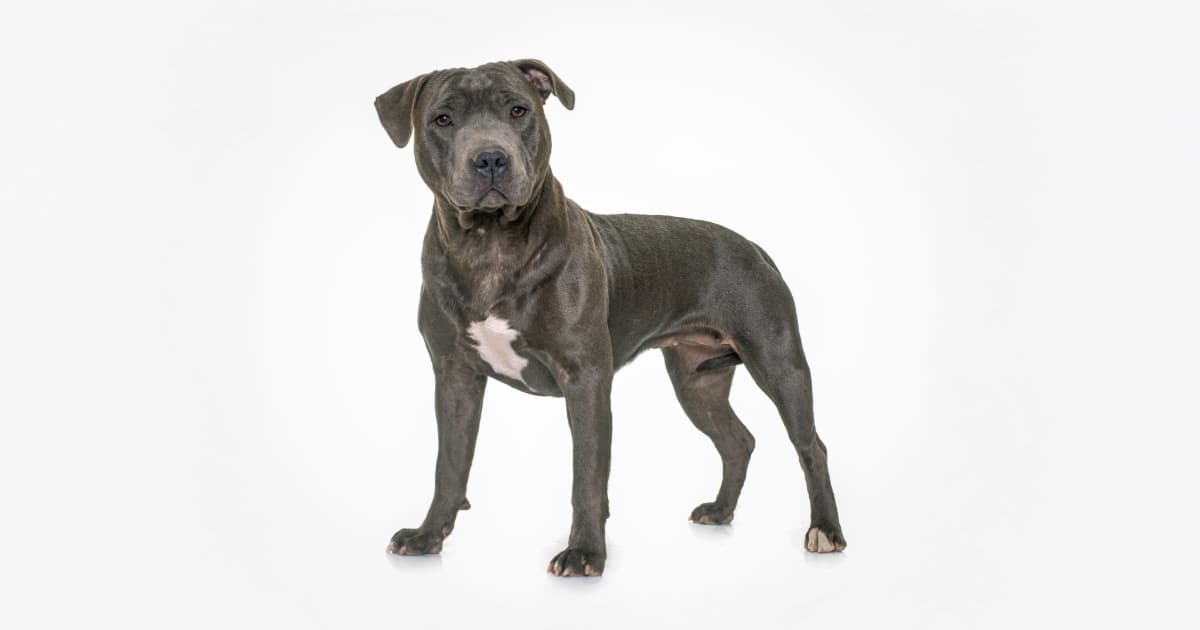
Both observation and hands-on palpation are used for evaluation of a dog’s body condition, using either a 5-point or 9-point BCS system. Typically, your vet will evaluate the body fat coverage over the ribs, down the topline and waist, around the base of the tail and along the bottom of the abdomen. A dog in ideal body condition will have an easily visible hourglass shape and an abdominal tuck in front of their hind legs. You should be able to easily feel, but not see, their ribs.
Why Should You Care About Your Dog’s BCS?
Maintaining a lean body condition and healthy weight is important for your dog because many common health issues are directly associated with extra weight. Overweight and obese dogs not only experience a poor quality of life, but they’re at greater risk for health problems, including:
- Shortened life span
- Arthritis and other bone and joint problems
- High blood pressure, which can cause kidney and heart disease
- Exercise intolerance
- Heat intolerance and stress
- Difficulty breathing
- Diabetes
- Some types of cancer
- Liver disease
The good news is that monitoring BCS and weight in tandem can signal small changes that allow you and your vet to take corrective action. And if your canine companion is already overweight, monitoring their BCS during a weight-reduction program can reinforce positive progress even when you might feel none is being made.
What’s the Ideal Dog Weight and BCS for Canine Athletes?
Canine sports medicine specialists, veterinary nutritionists and professional trainers agree that dogs perform better and live longer when they are kept lean, eat less food and weigh slightly less than is usually seen as “normal.” But what’s considered ideal weight for a racing greyhound will be different from what’s right for a police K9 or a sled dog. For performance dogs, a weight management program might not address the issue of body composition and the muscle mass and bone structure that the added activity demands. Body condition score can be a better indicator of the nutritional status of your dog than weight changes.
How to Calculate Body Condition Score for Your Dog at Home
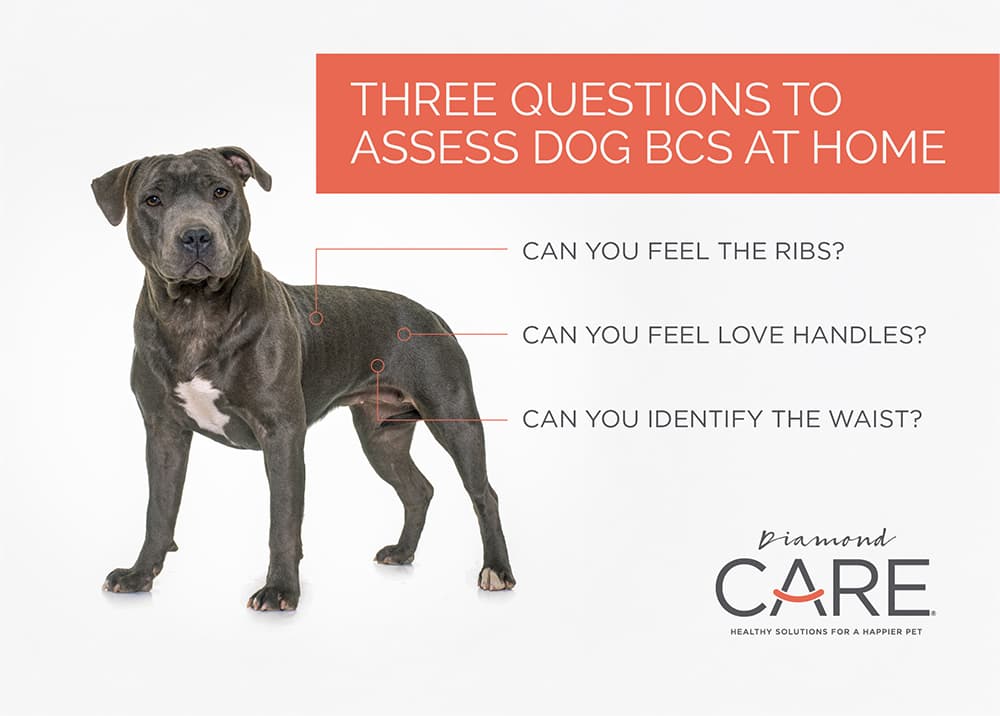
You can check whether your dog is becoming portly using an approach similar to what your veterinarian uses:
- Evaluate the fat covering the ribs. With your thumbs placed near your dog’s spine, run your hands along your dog’s sides. If your dog has minimal fat, with only a thin layer over the ribs, you will be able to feel the ribs using only slight pressure. This means your dog only has a slight fat covering and is likely in an ideal condition. But if you need to apply pressure to feel your dog’s ribs, then your dog likely has a thick fat layer and is probably overweight or obese.
- Look for an easily identifiable “waist.” When you look down from above, do you see an hourglass shape with a waist between the end of the rib cage and pelvic bones (hips)? Does your dog’s belly slope upward or tuck up from the ribs to the back legs when viewed from the side? If you aren’t seeing a waist and/or an abdominal tuck, chances are your dog is overweight.
- Check for a flat back and/or “love handles.” Overweight and obese dogs may look like they have a wider-than-normal back, and fat deposits over the hips or tail head can be obvious. If you think you could use your dog’s back for a table, then your dog is most likely overweight.
You can also ask your veterinarian or a veterinary technician to show you how to perform body condition scoring.
Find Your Dog’s Healthy Weight
If you regularly check your dog’s BCS at home and you suspect there has been some recent weight gain, you’ve taken an important first step toward addressing the problem: recognition. The next step is to schedule an appointment with your veterinarian, who can create a nutrition and exercise program to help your furry friend achieve their ideal body condition and weight.