

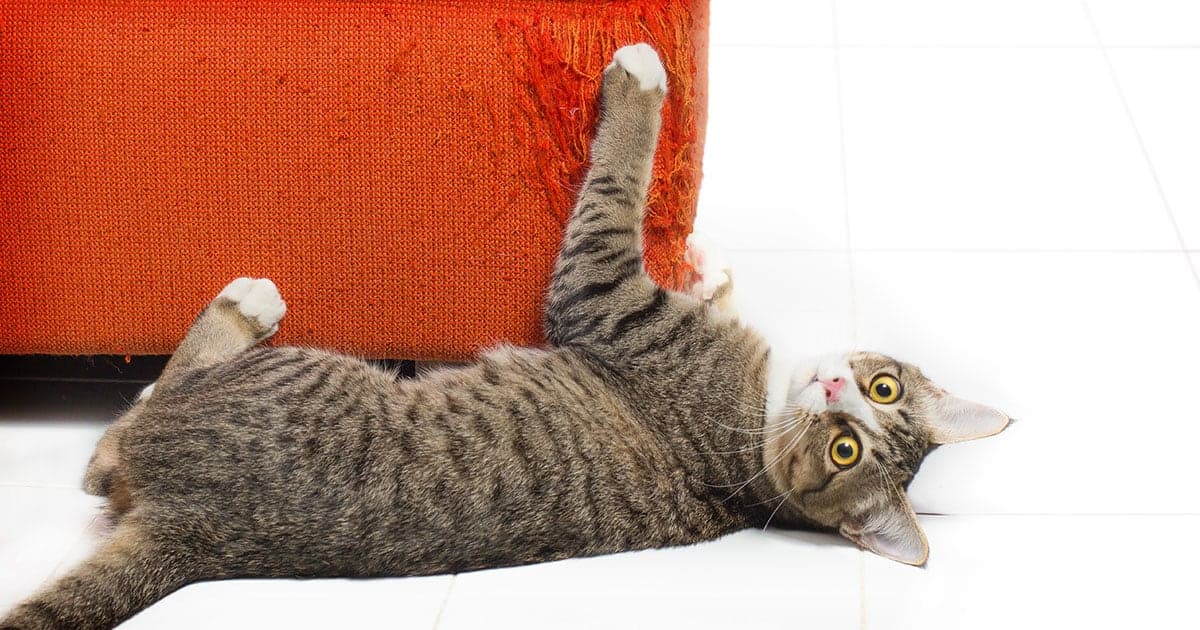
Are you tired of coming home to claw marks on a table leg or a shredded couch? If so, we’ve got good news: Your cat (probably) isn’t being vindictive. They aren’t scratching up your couch because you were thirty minutes late with their dinner last night. In most cases, scratching is not only normal, it’s instinctual; cats are compelled to find a (typically) vertical surface that they can go to town on with their nails. But whether it’s a direct message to you or an ancestral need, one thing is clear — you want the furniture shredding to stop.
Why Do Cats Like to Scratch Furniture?
Most cats at some point or another will scratch something in the house. Whether it’s your furniture, walls, cabinets or other not-made-for-scratching objects, the chances are high that they will eventually get their claws into something they’re not supposed to.
So why do cats like to scratch things? Well, they do this for a variety of reasons. They scratch for health and comfort, as scratching helps remove the older outer part of the claw, exposing the newer, sharper claw underneath. Sometimes they scratch for territorial reasons, leaving visual marks as well as scent-based reminders from the scent glands associated with their paws. And they also do it simply to stretch their bodies, from claw to tail.
So now that you know that your kitty isn’t going to (and shouldn’t!) stop scratching, you can switch your focus from prevention to protection. Protection of your furniture, that is.
How to Stop Cats from Scratching Your Furniture (and Other Things They Shouldn’t)
The easiest way to redirect your kitty’s couch-killing claws is to simply give them a better option and make the original scratch pad (i.e., your furniture) a less appealing choice. Your cat likely won’t love the first alternative you provide, so try to offer options with different shapes and textures. Though most kitties tend to prefer tall vertical scratching posts, some prefer horizontal surfaces. More often than not, coarse surfaces will do the trick. Objects made of corrugated cardboard, carpet-laden surfaces, sisal rope or even wood can divert their attention from your furniture.
It can also help to place scratching posts next to their favorite scratching area or next to where they sleep so it’s handy for stretching after a nap. Putting some of their favorite toys on or near the new scratching post may also encourage them to use it. You might even want to try to rub catnip on their new scratching areas to draw their attention to the right area.
Why Do Cats Scratch Posts?
For the same reasons they want to scratch your furniture! A scratching post or scratch pad provides them with different shapes and textures to feel and investigate while also keeping their paws in tip-top shape. Some cats may even prefer a cat tree or a wood-based scratching surface that will allow them to mark their territory without ruining a couch or new coffee table. Remember, not all cats are the same, so you may need to experiment with a few different objects to learn your cat’s preference and find an effective solution.
You Scratch My Back, I’ll Scratch Yours
As with any pet training, positive reinforcement is better than the ol’ squirt bottle. Be vigilant, consistent and patient, making a concentrated effort to reward your kitty with cuddles and treats every time they choose to give their new scratching posts a workout instead of what’s left of your kitchen table leg. Repetition and consistency are key.
As a last resort, many cat owners will use a water bottle to fire a few squirts of water at their kitty when they leap for the furniture claws-first, but this type of punishment is not recommended. Using a squirt bottle as a deterrent may instill fear over certain areas of the house (or certain people) in your cat, especially if he or she is a kitten or recently adopted adult.
If their scratching behavior persists, try keeping them away from the furniture or covering surfaces with blankets. You can even place double-sided sticky tape on the things they are unlawfully scratching, because cats hate sticky things.
Keep Their Claws Trimmed
Finally, keeping your cat’s claws trimmed can help limit the damage from their wayward scratching. Trimming your cat’s nails should be done regularly, whether they’re scratching inappropriately or not.
However, it’s important to note that declawing cats due to their destructive scratching behavior involves amputation of the last bone in each toe and is no longer considered acceptable by many veterinarians and veterinary organizations. It’s even become outlawed in several U.S. cities. While some veterinarians may still do the elective procedure as a “last resort” to prevent the cat from being abandoned or euthanized due to their behavior, many veterinarians will not perform the procedure unless it is medically necessary.
The surgery and recovery can be very painful and involves risks to their health (e.g., infection, lameness, chronic pain). If you are considering declawing your cat, please talk with your veterinarian about potential alternative solutions for your cat.
Remember, your cat’s desire to scratch can be manageable! With a little patience and a lot of understanding, you can make your cat happier and your lovely furniture can last much longer.