
A happy wiggle, a few tail wags and slobbery kisses: Dogs have a way of making their greetings memorable. But what is the meaning behind those sweet licks? Most licking is a normal behavior dogs use to communicate, explore, seek attention or connect with people. To know the meaning behind your dog’s licks, you need to look at the situation and the rest of their body language.
What Does It Mean When a Dog Licks You?
There is no single answer to what it means when a dog licks you. The same dog may lick for different reasons at different times. You have to consider when the licking starts, where your dog licks you and what happens immediately afterward. For example, a loose body and soft expression suggest a different motivation than pinned-back ears, a tucked tail or attempts to move away.
Dogs learn that licking is a behavior that can produce results. A lick may earn petting, the start of a game or attention from you. A lick can also help your dog investigate an interesting smell. Looking at the full situation can help you understand the reason for the lick.
Common Reasons Dogs Lick People
Here are a few of the reasons behind why dogs lick their people:
- They Want Attention: Licking often gets an immediate response — you may laugh, pet your dog, speak to them or push them away. Even a reaction that feels negative to you can be rewarding if your dog wants interaction.
- They Need Something: Over time, most dogs learn that licking is a reliable way to ask for play, affection or a meal.
- You Smell and Taste Good: Your skin carries salt from sweat, traces of food, soaps and lotions. Dogs use their mouth and nose to gather information, so a quick lick may simply be sensory exploration. This is one reason licking can increase after you exercise, prepare food or eat.
- Do not allow your dog to lick skin that has medication, essential oils or another product on it unless your veterinarian has confirmed the product is pet-safe.
- They’re Communicating: A lick may be a friendly greeting, a request for reassurance or an appeasement signal during an uncertain interaction.
Some dogs lick people, their own body or nearby objects when they feel bored, stressed or anxious. Occasional licking during a new situation is not automatically a problem. Frequent licking that is difficult to interrupt, however, may point to anxiety, pain or another concern.
Do Dogs Lick to Show Affection?
Yes, dogs may lick to show affection. Licking begins early in life as a mother dog grooms and cares for her puppies, and it can remain part of friendly social interactions as dogs grow. Your dog may lick you during a calm greeting, while cuddling or after you give them attention. Dogs may show other signs of affection like wagging their tail, leaning against you or choosing to stay nearby.
Still, not every lick means “I love you.” Some dogs lick when they are uncomfortable and want more space. Turning the head away, avoiding eye contact, lowering their body, pinning their ears back or tucking their tail can be signs of discomfort. Always check your dog’s body language rather than assuming every lick is an invitation for more contact. Make sure children understand that a dog should never be hugged, cornered or encouraged to lick when the dog is showing signs of stress.
Why Do Dogs Lick Your Face?
It’s easy to see why a human’s face is a favorite place for many dogs to lick; your face provides plenty of scent and taste information, and face licking usually produces a noticeable response (good or bad). Social behavior may be another reason dogs lick faces — puppies lick around their mother’s mouth and some dogs lick other dogs’ muzzles during greetings. Your dog could be showing affection, seeking attention or investigating the delicious smelling food that you just ate.
It’s fine to set boundaries if you want your dog to stop licking your face; just calmly turn away and redirect your dog before they reach your face. For basic hygiene, you should avoid letting your dog lick you around your eyes, nose or mouth and across broken skin.
Why Do Dogs Lick Your Hands?
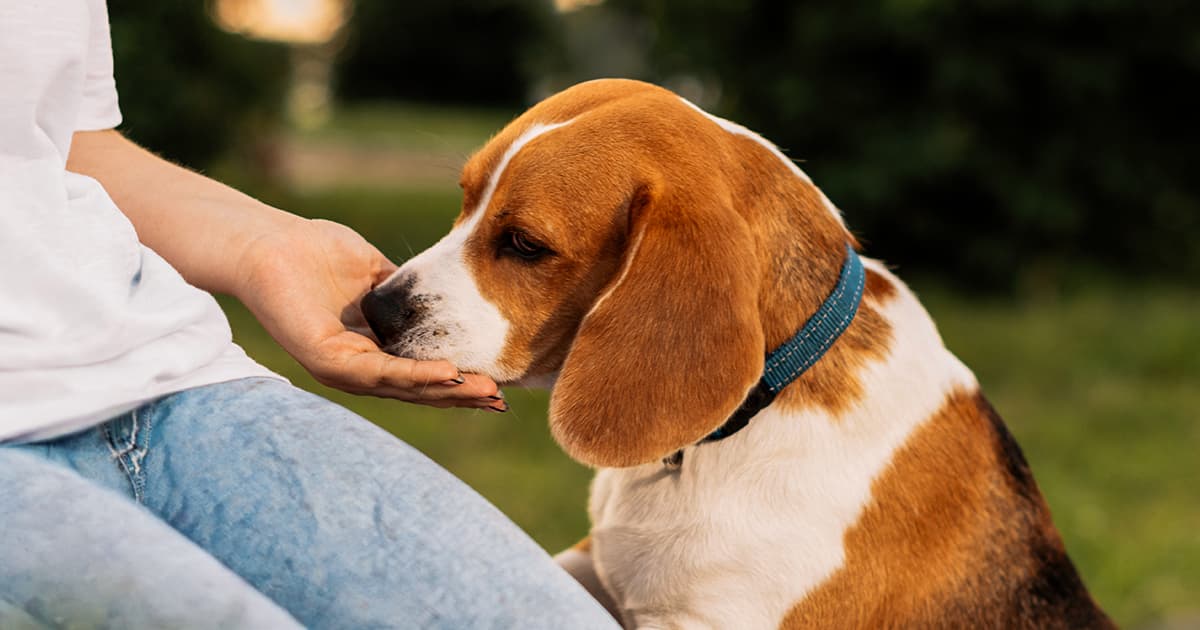
The answer may simply be that your hands are easy for your dog to reach and they’re full of interesting smells. They may carry traces of food, salt, lotion, or the scent of other animals or places you have visited. Dogs also learn that licking a hand often leads to petting or attention. Pay attention to what happens before and after the licking. A brief hand lick during a relaxed greeting is usually a normal dog kiss. Repeated licking while you are eating may be an attempt to investigate food, while licking during a tense interaction may be a request for reassurance or space. Context helps explain the behavior.
When Does Dog Licking Become a Problem?
Licking deserves a closer look when it changes suddenly, becomes intense or interferes with normal activities. Contact your veterinarian if your dog is hard to interrupt, spends long periods licking, wakes up to lick, or stops eating, resting or playing because of the behavior. You should also schedule an exam if licking is accompanied by other symptoms such as vomiting, restlessness, limping, sensitivity to touch, hair loss, redness, odor, sores or repeated attention to one area.
Excessive licking can be associated with health conditions including allergies, skin irritation, infection, nausea, dental discomfort, pain, anxiety or compulsive behavior. Because medical and behavioral causes can look similar, a veterinarian should rule out health problems first. If no medical cause is found, your vet may recommend working with a qualified behavior professional.
How Can You Discourage Unwanted Dog Licking?
If you aren’t a fan of your dog’s licking behavior, avoid yelling at or physically punishing your dog, as this adds stress and doesn’t teach them what to do instead. When licking is clearly attention-seeking, pause the interaction by calmly turning away. Then redirect your dog to a toy, chew or another appropriate activity. Reward calm behavior, such as keeping four paws on the floor or responding to “sit,” before offering attention.
Consistency is important — everyone in the household should respond to unwanted licking in the same calm way. If the licking appears connected to fear or discomfort, stop the interaction and give your dog space rather than asking for obedience behavior. Sudden or persistent changes should be discussed with your veterinarian before you assume the behavior is simply a habit.
Understanding Your Dog’s Licks
So, why does your dog lick you? It may be affection, curiosity, communication, comfort or a learned way to get your attention. Consider the circumstances and your dog’s entire body language to understand the message. Most licking is simply part of life with a dog, but a sudden or excessive change is worth discussing with your veterinarian.